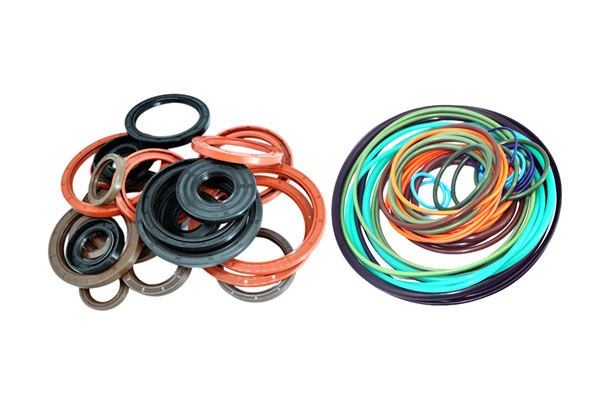


What are the reasons for oil leakage after installing the skeleton oil seal?
Common causes of oil leakage after installation of skeleton oil seal
1、 Installation issues (common)
Oil encapsulation reverse
The spring side and sealing lip are not facing the oil chamber, which directly leads to seal failure and oil leakage.
Installation skewed or tilted
When the oil seal is pressed in, it is not perpendicular, the lip is subjected to uneven force, and the local sealing is not tight.
Excessive impact and deformation
Directly hitting with a hammer can cause deformation of the outer ring of the oil seal, lip flanging, and spring detachment.
Not lubricated or improperly lubricated
Lip dryness caused by pulling during startup; The use of lubricating grease other than engine oil caused swelling.
Installation scale is incorrect
The sealing position deviates from the working surface due to insufficient or excessive pressure.
2、 Axis issue
Scratches, grooves, and wear on the shaft neck
The lip of the oil seal cannot fit tightly, resulting in a gap and oil leakage.
The surface roughness of the shaft is too large
Pulling the lip of the oil seal and damaging the seal.
The shaft has burrs and sharp corners
Cut open the lip of the oil seal directly.
Excessive shaft runout and eccentricity
During rotation, the lips cannot continuously adhere, resulting in periodic leakage.
3、 Problems with cavities/holes
The installation hole is deformed, out of roundness, and has burrs
The outer ring of the oil seal is not tightly sealed, causing oil leakage from the back.
The hole size exceeds the tolerance and is too large
The outer ring of the oil seal is too loose, causing creeping and rotation, resulting in oil leakage.
4、 The problem with the oil seal itself
Model and size do not match
The inner diameter, outer diameter, and height are incorrect, and the sealing surface does not fit properly.
Wrong material selection
The mismatch between temperature resistance and oil resistance leads to swelling, shrinkage, hardening, and cracking of the oil seal.
Poor quality of oil seal
Uneven lips, insufficient spring elasticity, and rubber defects.
5、 Working conditions and usage issues
Oil temperature is too high
Rubber aging, loss of elasticity, and sealing failure.
excessive stress
Exceeding the bearing range of the oil seal, the lip is blown open.
Impurities and dust entering
Wear the lip and form a leakage channel.
Poor exhaust and abnormal negative pressure
Causing the oil seal to be sucked open or oil to be thrown.