
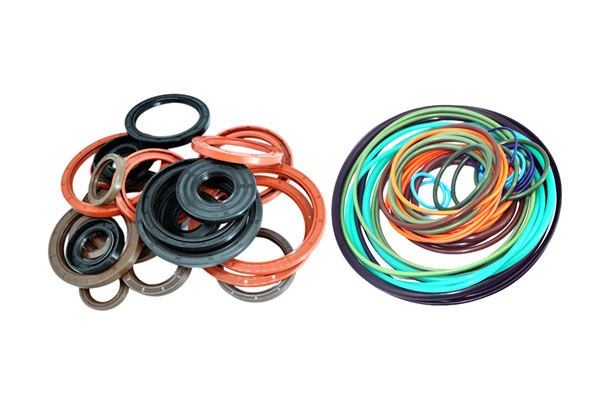

 Product List
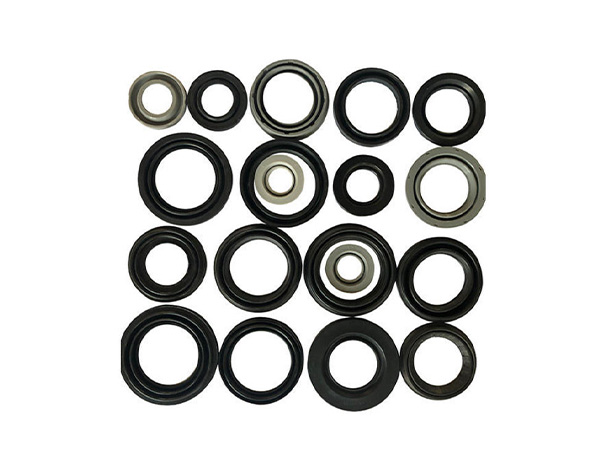
Silicone rubber caliper sealing ring
Silicone rubber caliper sealing ring is a dynamic sealing component installed between the piston and cylinder body of the automotive disc brake caliper. Its core function is to seal the brake fluid, prevent leakage, and assist in piston return.
Core working principle
Sealing and leakage prevention (self sealing effect)
Installation preloading: When the sealing ring is installed in the caliper groove, it is preloaded (about 15% -25%), and the silicone rubber elasticity is used to tightly adhere to the piston and cylinder wall, filling the micro gap and forming the initial seal.
Pressure self sealing: When braking, hydraulic pressure pushes the sealing ring to expand towards the low-pressure side, and the contact pressure increases synchronously with the oil pressure. The higher the pressure, the tighter the seal, preventing brake fluid leakage.
Auxiliary piston return (rebound effect)
This is a key function unique to the caliper seal ring. After the brake is released and the oil pressure disappears, the sealing ring relies on its excellent elastic recovery force to rebound from the compressed deformation state, driving the piston to retreat slightly (about 0.05-0.15mm), relieving the drag between the brake pads and brake discs, reducing wear and fuel consumption.
Characteristics of Silicone Rubber (VMQ) Material
Extremely wide temperature resistance range: -60 ℃~230 ℃ for long-term stable operation, can withstand 300 ℃ for a short time, and can cope with the high temperature and extremely cold environment generated by braking.
Strong aging and weather resistance: The Si-O bond structure is stable, resistant to ozone and ultraviolet radiation, and does not crack after long-term outdoor use, with a lifespan far exceeding that of ordinary rubber.
Good elasticity and resilience: The compression speed is suitable for recovery, the deformation rate is low after long-term compression, and the long-term sealing and return function are protected.
Good chemical stability: It has good tolerance to DOT3/DOT4/DOT5.1 brake fluid, weak acids, and weak bases.
Disadvantages: The mechanical strength and performance are average, not as good as nitrile rubber (NBR) and fluororubber (FKM), so it is mostly used in low to medium load, high temperature, and long-life scenarios.
Failure performance
Brake fluid leakage: There are oil stains on the caliper, the brake becomes soft, and the fluid level drops.
Brake drag/uneven wear: The sealing ring fails to return, the piston does not return, the brake pads continue to rub, heat up, and fuel consumption increases.
Stuck and abnormal noise: The hardened or damaged sealing ring causes the piston to move poorly, resulting in shaking or abnormal noise when braking.
Application scenarios
Mainly used for stable performance, luxury, new energy vehicles, or braking systems that require high temperature resistance (based on actual reports), long lifespan, and reliable performance. It is also suitable for harsh working conditions such as racing cars and modified cars.

+8613643198879
+8615127907633
+8615831915353

Yangjiazhai, Wanghuzhai Town, Julu County, Xingtai City, Hebei Province
Copyright © 2026-2027 http://www.ysxiangsu.com. All Rights Reserved Xingtai Yishuo Rubber and Plastic Technology Co., Ltd Copyright